First Dollars On-Chain: Mapping the Privacy Footprint of Every Crypto On-Ramp
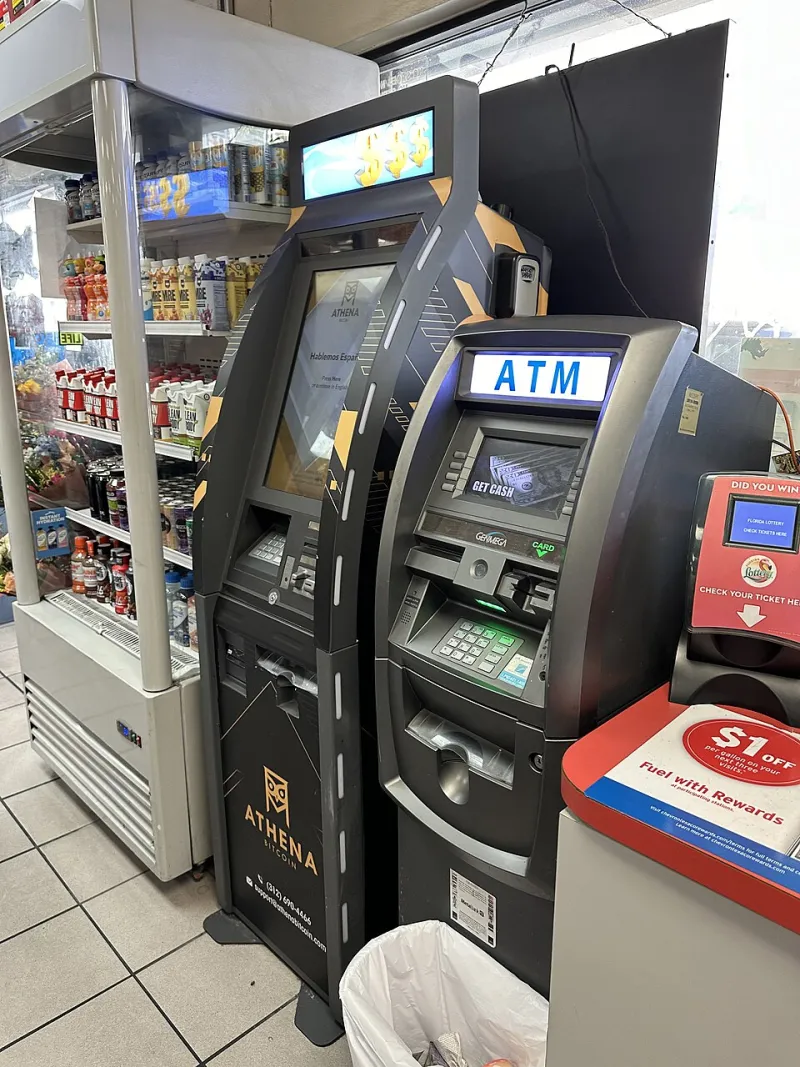
Photo: Phillip Pessar, CC BY 2.0, via Wikimedia Commons
The moment most Americans decide to take self-custody of their crypto, they run into a question nobody warned them about: how do I get funds into this wallet without announcing myself to the world?
It's a legitimate concern. Blockchains are public by design, and while your name isn't written on-chain, the trail between your bank account, an exchange, and your wallet address can be more revealing than most newcomers realize. Understanding the trade-offs of each funding path is the first step toward controlling your own exposure.
Why On-Ramps Matter More Than You Think
A blockchain transaction is permanent. Once your wallet address is linked — even loosely — to your identity through a funding event, that association can persist across every future transaction from that address. Analytics firms, marketers, and in some cases government investigators all use chain analysis to cluster addresses and attribute activity.
For most people, complete anonymity isn't the goal, and it isn't realistically achievable. The practical objective is data minimization: revealing only what is legally required, and nothing more.
Path One: The KYC Exchange Withdrawal
The default route for most Americans is a regulated exchange — Coinbase, Kraken, Gemini, or similar. You verify your identity, link a bank account, buy crypto, and withdraw to your own wallet.
What's good about it: It's legal, straightforward, insured against certain operational failures, and generates clean records for tax season. For amounts under a few thousand dollars, this is a perfectly defensible choice.
What it costs you in privacy: The exchange knows exactly who you are, how much you bought, and which address you sent it to. That information lives in their systems indefinitely and can be shared with third parties or subpoenaed. Additionally, some chain analysis tools flag exchange withdrawals, meaning your wallet's first transaction is already categorized.
Cost note: Expect trading fees of 0.4%–1.5% plus network fees on withdrawal. Withdrawal fees on Bitcoin can run $1–$5 depending on network congestion.
Path Two: Peer-to-Peer Marketplaces
Platforms like Bisq, RoboSats, and certain Hodl Hodl-style services connect buyers and sellers directly. You pay via Zelle, bank transfer, or cash by mail, and the seller releases crypto from escrow to your wallet.
What's good about it: No centralized custodian holds your purchase records. Prices are often competitive, and for smaller amounts the privacy improvement is meaningful.
What it costs you in privacy: Less than you might hope. Counterparties see your payment details — a Zelle transfer includes your legal name. Bank transfers are logged by your financial institution. And P2P platforms carry real fraud risk: chargebacks on payment apps, escrow disputes, and outright scams are common enough to demand caution.
Cost note: Expect a 1%–3% premium over spot pricing, plus trading fees on decentralized platforms.
Path Three: Bitcoin ATMs
With over 30,000 machines across the US — heavily concentrated in California, Texas, and Florida — Bitcoin ATMs let you insert cash and receive crypto directly to a wallet address you control.
What's good about it: No bank account involvement. For modest amounts, this is one of the shortest paths between cash and self-custody.
What it costs you in privacy: More than the marketing suggests. Most US machines require phone number verification at minimum, and many require ID scans for transactions above $900 or so under state money-transmission rules. Operators keep those records.
Cost note: This is the expensive option. Fees of 8%–20% over spot are common, and some machines add hidden spread on top of an advertised rate. For anything beyond small amounts, the cost of privacy purchased this way is steep.
Practical Hygiene for Any Path
Whichever route you take, a few habits reduce long-term linkage:
- Use separate addresses. Don't fund your primary savings wallet and your spending wallet from the same on-ramp transaction.
- Consider a UTXO break. Sending funds through an intermediate wallet before final storage severs the most obvious direct link, though sophisticated analysis can still trace patterns.
- Keep your own records. Privacy is not tax avoidance. Every US taxpayer owes reporting on crypto dispositions regardless of how the coins were acquired, and clean records protect you in an audit.
- Never reuse addresses across funding methods. Mixing a KYC'd withdrawal and a P2P purchase in one address merges both identity trails.
The Bottom Line
There is no zero-footprint on-ramp for US residents, and chasing one often leads people into riskier territory than the exposure they were trying to avoid. The realistic playbook is simple: use a regulated exchange for the bulk of your holdings where the paper trail is acceptable and the record-keeping is clean, use P2P or ATMs selectively for smaller amounts where the premium is justified, and practice basic address hygiene regardless of method.
Privacy on a public ledger is a spectrum, not a switch. Decide in advance how much of it you need — and pay only for that much.