When Features Become Liabilities: Five Wallet Marketing Claims That Should Make You Walk Away
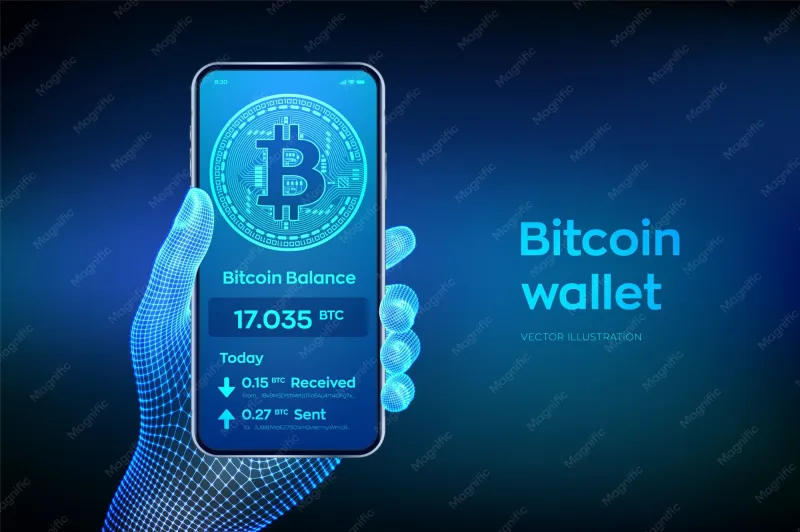
Photo: smartphone crypto wallet app screen closeup, via img.freepik.com
Wallet app stores are crowded, and competition for your attention has produced an arms race of flashy features. Unfortunately, some of the most heavily marketed conveniences are the very things a security professional would flag first. Here are five claims that sound like benefits but deserve your suspicion.
1. "Encrypted Cloud Backup for Your Seed Phrase"
This is the big one. Some wallets offer to store your recovery phrase in their cloud infrastructure — encrypted, they promise, so only you can decrypt it.
The problem is structural, not technical. A seed phrase is the master key to your funds. The moment it exists on someone else's server, you've reintroduced the custodial risk you downloaded a self-custody wallet to escape. Encryption can be broken, keys can be mismanaged, companies can be acquired, and servers can be breached. In 2022 and 2023, several wallet providers suffered incidents where customer backup data was exposed.
The alternative: Write your phrase on paper or stamp it into steel. Store copies in two geographically separate physical locations. It's analog, but it works, and it can't be phished from a data center.
2. "Built-In Swaps at Competitive Rates"
One-tap swapping inside your wallet feels seamless. But check the math: many wallets embed their fee into the exchange rate itself — a spread of 1% to 3% that never appears as a line item.
Worse, some integrated swap services route through liquidity providers of questionable reputation, and a handful of cloned wallets have used the swap function to redirect funds entirely.
The alternative: If you need to swap, compare the wallet's quoted rate against a major exchange or an established DEX aggregator. If the difference is more than about half a percent, you're paying a hidden toll.
3. "Staking Rewards Inside Your Wallet — Up to 15% APY"
Genuine staking on proof-of-stake networks exists and is legitimate. But when a wallet advertises eye-popping yields on assets that don't natively support staking, you're usually looking at a lending scheme dressed up in staking language. Your deposited coins get lent out to counterparties you'll never see, and in several documented cases, they've never come back.
The alternative: If you want yield, stake natively through the protocol itself or use a provider with a long, auditable track record. If the return seems calibrated to a marketing department rather than network economics, treat it as a red flag.
4. "Customer Support That Can Restore Your Wallet"
No legitimate self-custody wallet can restore your funds — not their support team, not their engineers, nobody. Any support agent who claims they can recover your wallet with your seed phrase, a 'verification code,' or a remote session is either confused or running a scam. Support impersonation is one of the fastest-growing crypto scams in the US, often beginning with a fake phone number found through a search engine.
The alternative: Bookmark your wallet's official support page directly. Assume anyone who contacts you first — by email, phone, or Discord DM — is fraudulent until proven otherwise.
5. "Social Login — Sign In With Google or Apple"
Convenience again. But a wallet accessed through your Google account is only as secure as that account, and your Google account is only as secure as its recovery email, phone number, and password hygiene. Account takeover through SIM swaps and phishing remains one of the most common compromise vectors in the US. A wallet gated behind a recoverable web login is functionally a custodial product with extra steps.
The alternative: Wallets that generate keys locally on your device and require the seed phrase — and only the seed phrase — for recovery. That's the standard.
How to Vet a Wallet in Ten Minutes
Before installing anything: check whether the code is open source; look for a published security audit from a firm like Trail of Bits or Least Authority; read recent app store reviews for reports of locked funds; confirm the wallet never asks for your seed phrase except during recovery; and verify the official download source manually.
A wallet's job is to hold keys and sign transactions. Everything beyond that is a trade-off — and when the marketing outpaces the security model, you're the one paying for it.